
EV Fleet Charging
Simplify Fleet Electrification
Fleet electrification requires integrated planning across vehicles, charging infrastructure, utility service, facility operations, and future electrical capacity. Charging plans should account for vehicle duty cycles, dwell times, route requirements, charger power levels, facility loads, utility capacity, permitting, and expected fleet growth.
Core Development Group supports commercial, industrial, and municipal fleet operators with project-specific Engineering, Procurement, and Construction (EPC), construction management, project management, supporting electrical infrastructure, battery storage integration, and commissioning services. Our team helps develop charging infrastructure aligned with current operating requirements and future fleet expansion.
Benefits of Fleet Charging Infrastructure
Fleet charging infrastructure can help organizations reduce vehicle emissions, simplify fleet maintenance,
manage energy costs, and support broader sustainability objectives.
Reduces Fleet Tailpipe Emissions
Simplifies Fleet Maintenance
Helps Manage Energy Costs
Supports Sustainability Goals
An EV fleet consists of electric vehicles owned or leased by a business, government agency, nonprofit organization, utility, educational institution, or transit operator. Fleets may include light-, medium-, or heavy-duty vehicles used for delivery, transportation, field service, and other commercial or industrial applications.
Types of EV Fleets Include:
- Distribution and Delivery Fleets
- Shuttle Bus Fleets
- School Transportation Fleets
- Public Transit Fleets
- Commercial and Utility Fleets
- Last-Mile Delivery Fleets
Roadmap to Fleet Electrification
Engineering
Utility Coordination
Permitting
Construction
EV Charging
Engineering
Utility Coordination
Permitting
Construction
EV Charging
EV Fleet Charging Solutions
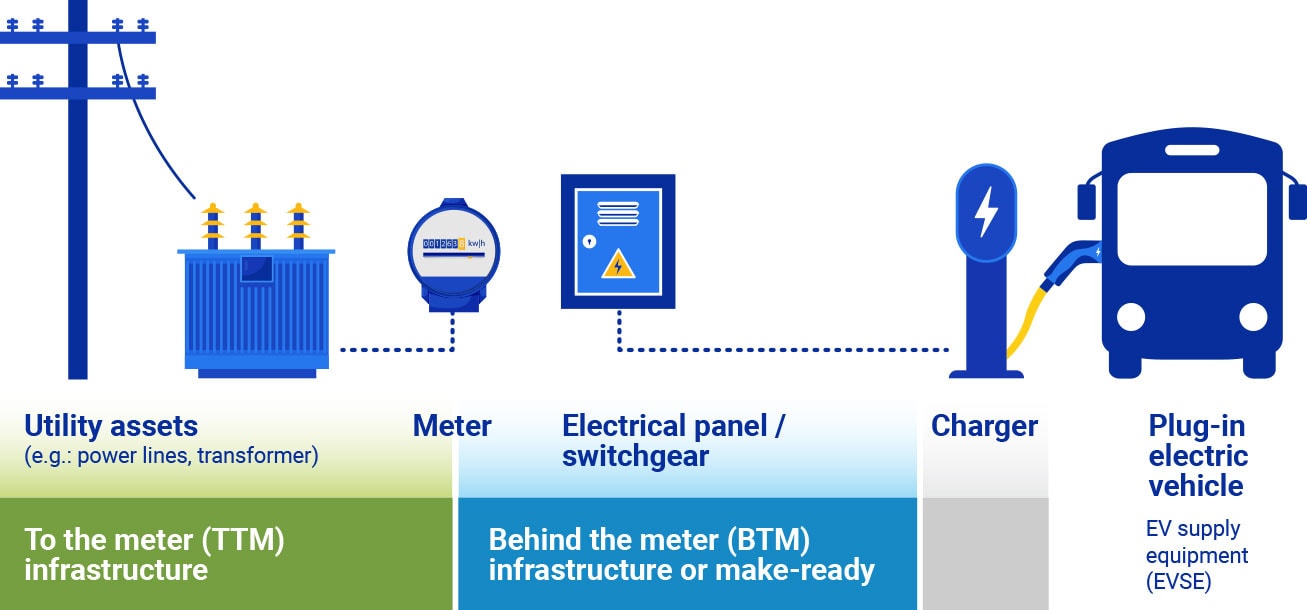
EV fleet charging stations can be installed at facility headquarters, distribution hubs, fleet depots, or strategic locations along fleet routes. Key considerations include available utility service, existing electrical capacity, charger types and quantities, fleet schedules, and future expansion. Charging infrastructure can be designed for new or existing electrical systems, with upgrades based on site and load requirements.
Fleet electrification introduces different operating and electrical considerations than gasoline- or diesel-powered vehicles. Fleet owners should evaluate demand charges, energy costs, charging windows, and expected fleet growth. Battery storage, smart charging, and load-management systems can help manage peak demand and electricity costs.
Fleet Electrification
Fleet electrification can help owners and managers modernize operations, reduce vehicle tailpipe emissions, and prepare for evolving transportation requirements. Successful implementation requires careful evaluation of vehicle duty cycles, charging schedules, site electrical capacity, utility requirements, energy demand, and future fleet growth.
Early engagement with utilities, regulators, and equipment suppliers—supported by appropriate engineering, construction, smart charging, and battery storage integration—can help fleet operators develop charging infrastructure that supports current operations and future expansion while managing energy demand and costs.
